
“If the Mountain Was Smooth, You Couldn’t Climb It.”
Honoring Bob Williams, A Pioneer, Husband, and Builder of Community
This Black History Month, as we prepare to unveil the portrait of Robert “Bob” Lee Williams in Sabathani Community Center’s Southside Sports Hall of Fame, we remember more than a basketball player. We remember a pioneer. We remember a husband of 68 years. We remember a man who helped to build institutions that still shape our community today.
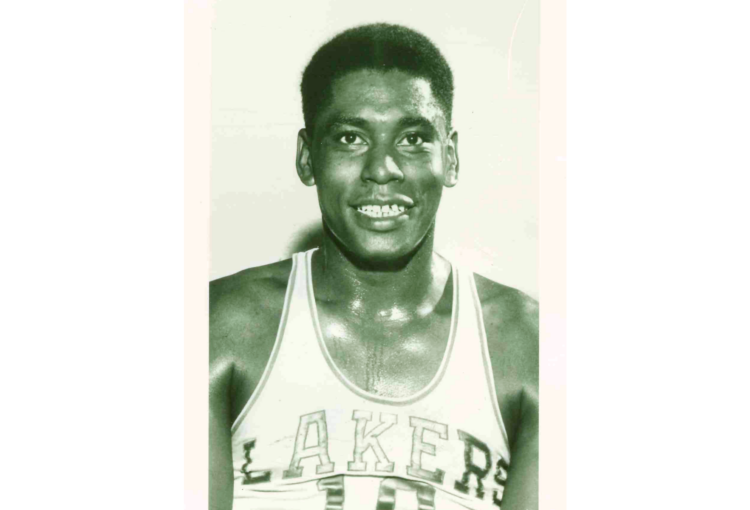
Bob Williams (May 12, 1931 – January 19, 2021) made history as the first Black player for the Minneapolis Lakers during the 1955-56 season and part of the 1956-57 season. But history books only tell part of the story.
To understand the full legacy, you have to hear it from the woman who walked every mile beside him — his wife of 68 years, Marietta Williams. As we connected to discuss Bob’s induction into Sabathani’s Southside Sports Hall of Fame on February 27, she shared the story behind the history.
“Mr. Williams, Thank You for Paving the Way.”
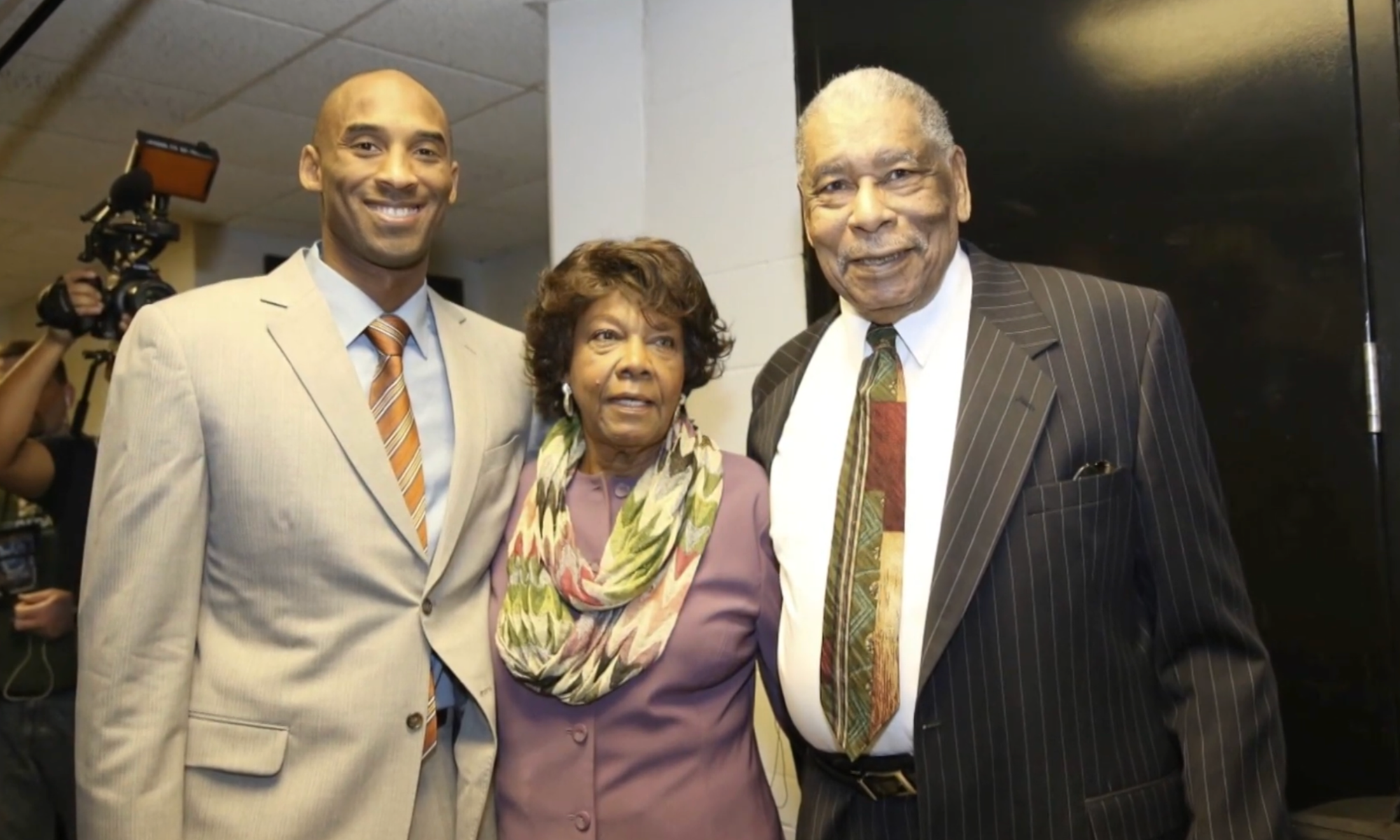
Years ago, the Los Angeles Lakers contacted Bob with a special request. Kobe Bryant — in his final season — wanted to meet him. “They said, ‘Mr. Williams, since you were the first Black Laker, Kobe is playing his last game in Minnesota and he asked if he could meet you.’”
At the Target Center, the press escorted Bob and his wife down to the locker room. “The bus pulled in with the Lakers. We were told Kobe was coming by limousine. When he turned the corner, he stretched out both arms and hugged my husband and said, ‘Mr. Williams, thank you so much for paving the way.’”
She pauses. “I’m 93 years old, and I’ll never forget two things about Kobe. That young man was so humble — like an extended family member. And he glowed with self-confidence.”
As Kobe walked away, he turned back and shared something that has stayed with her ever since:
“If the mountain was smooth, you couldn’t climb it. And if you don’t try to climb that mountain, you’ll stay at the bottom.”
Now, at 93, she shares that message with young people everywhere she goes. “I tell them — don’t you stay at the bottom of nothing. We all fall down. But we don’t have to stay down.”
From Pensacola to Minneapolis
Bob’s journey to Minnesota began far from bright lights and professional arenas.
He and his wife married at 18 and 19 years old in Pensacola, Florida. He worked for $27 a week. It wasn’t enough to support his young family, so he enlisted in the Air Force. While stationed in Texas, he played on the Air Force basketball team. A coach approached him with life-changing news: he had been selected to play in the Second Pan American Games — a competition that paved the way toward the Olympics. He trained in Ohio. He played in Mexico. He was named Most Valuable Player.
Then came another phone call. “Babe,” he said, “Guess where I am? I’m in Minnesota.” He had just signed with the Minneapolis Lakers for $6,500 for the season. The team promised four things:
- They would pay for him to return to college at the University of Minnesota.
- They would fly his family to Minnesota.
- They would help him find a job.
- They would find housing.
The Williams family boarded a train and moved north in 1955. They had no idea what awaited them.
“We Weren’t Looking to See Who Was Black or White.”
Their first home was on 11th Avenue South in Minneapolis. The day they moved in, a white neighbor knocked on the door. “My name is Gene B., and I want you folks to know we’re upset you moved into our neighborhood.”
Fresh from the South, she replied calmly, “When we were looking for a house, we weren’t looking to see who was Black or white. We could afford the house — and that’s why we bought it.”
Within days, nearly every house on the block went up for sale. Then something shifted. A full-page photo of Bob in his Lakers uniform appeared in the Star Tribune. The signs came down. But prejudice did not disappear.
She remembers kneeling in her yard planting flowers when children walked by. “They smiled and said, ‘Hi, n——.’ They thought they were paying me a compliment.”
On road trips, Bob was the only Black player on the team. While white teammates rode in limousines and dined in restaurants, Bob was sent to segregated hotels and had meals delivered to his room because he could not eat in white establishments. Opposing players hurled slurs during games. And yet — he endured.
A Life Bigger Than Basketball
Bob Williams did not let racism define him. After his professional career, he co-founded the Minnesota chapter of the Fellowship of Christian Athletes. He chaired the board of Hospitality House in North Minneapolis. He was involved with the Boys & Girls Club.
He drove through neighborhoods looking for boys sitting on porches with nothing to do. “He’d get out of the car, knock on the door, and ask parents if he could take their sons to Hospitality House, give them a meal, teach them basketball. But they had to study the Bible too.”
He and his wife were married for 68 years. They sang in church choirs. They helped found Progressive Baptist Church in Minneapolis. They served as deacons. And perhaps most beautifully, his connection to Sabathani runs deep.
Before Sabathani Community Center became what it is today, it was Sabathani Baptist Church at 38th and 3rd Avenue. Bob helped lay part of the foundation when that building was constructed.
“Write Me Down as One Who Loves His Fellow Man.”
During our conversation, she recited a poem she learned in junior high school at age 13:
“I pray thee then, write me down as one who loves his fellow man.”
That line, she said, reminds her of her husband.
History will remember Bob Williams as the first Black Minneapolis Laker. Minnesota will remember him as a pioneer. Sabathani will remember him as a builder — of institutions, of faith communities, of young people, of opportunity. This Black History Month, we honor not just the barrier he broke but the lives he lifted.
Join Us
Bob Williams will be formally inducted into Sabathani Community Center’s Southside Sports Hall of Fame at our upcoming unveiling ceremony on February 27, alongside four other community changemakers. Click here to learn more and RSVP.
The portraits will remain permanently displayed in our hallway — a reminder that mountains are meant to be climbed and that none of us stand here alone.
Great story. Thank you for the positivity. May we all find more Mr. Williams in the world and work to embody his spirt, values, and service.